
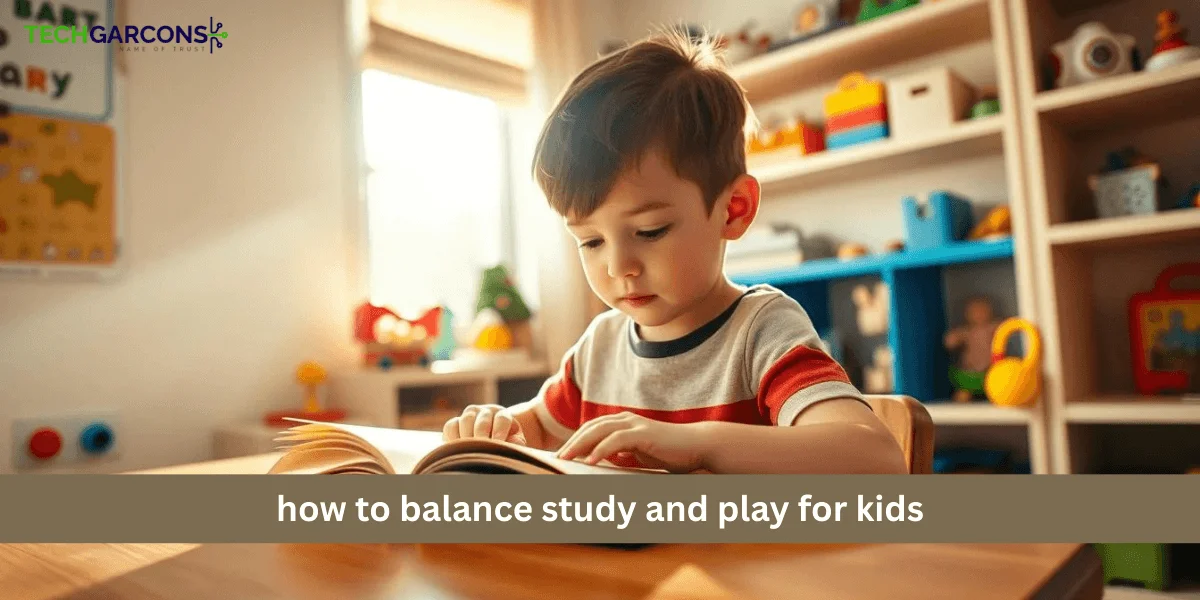
Parents find it hard to take the time for school and the time for fun. Children have to be taught, but they also have to have fun, take a break, and learn. Too much school or too little school will both have a negative impact. Balance is the answer.
Why Balancing Study and Play Matters
Little ones will find it boring, will get annoyed, and will not care if all they do is learn, and will hate to do their work if all they do is fool around. A good hangout means you will keep the kid sharp up top, hopping about up front, and all sprited out.
1. Develop a Daily Routine
A structured routine gives children an idea of when they should study and when they should play. For example:
- After School- snack and relax.
- Homework- 30-45 minutes
- Play- 1-2 hours (may be outdoor or indoor play)
- Having an established routine will encourage discipline, and discipline will help achieve a balance.
2. Keep Study Sessions Short & Focused
Kids learn much more when they get to focus on one short amount of time and then switch. Say, 25-30 minutes of focus plus 5 to 10 minutes of rest. Rest will help, especially in not adding to the brain’s pressure.
3. Bring Fun into Learning
One way to bring a fun element into studying is to turn it into games and challenges. For example:
- Puzzles for math.
- Board games or word games for spelling.
- Science experiments at home.
When kids feel that they are learning while having fun, they appreciate that study can take place anywhere (even at home) and therefore learn to include study as part of their play.
4. Encourage Outdoor Activities
Play is as important as schoolwork. Rolling, catching, or kicking a ball, running, biking, and other forms of active play will improve:
- Physical fitness
- Social skills
- Mood and concentration
Physical activity and fresh air prepare the child to return to study level with more energy.
5. Limit Screen Time
Excessive screen time can diminish the quality of study and active play. Control the time and restrict:
- Video games (usually considered passive)
- Social media
- Television
Should your child not be engaged in screen time, then reading, hobbies, or sports should fill the space.
6. Encourage Support and Guidance
Be interested in homework and participate in games. This demonstrates to your child that learning and play are both important. Balance is easy if parents are involved.
7. Teach Time Management
When children are older, you can let them create simple schedules. You can teach them to:
- Plan homework time
- Choose play activities
- Balance free time with study time
This encourages independence!
Final Thoughts
Learning & having fun mix well for kids. It helps them learn, exercise, and enjoy growing up. When kids learn while having fun, they can find it easy, while being happy, to do well at school. Over time, kids want to keep learning and having fun. Kids can live and learn, and have fun in ways that fit them, with moms & dads assisting and having a good plan. Kids can have the two!
FAQs
Most school-age young children get along well with 12 hours a day. Smaller children will require less, whereas the older children may require more.
Active play is good; it includes outdoor games, imaginative play, and those activities that enhance social skills. All these activities make the children busy, active, and social with each other, and encourage the cooperation of the children.
Yes. You know, if children are just playing all the time, they may not get their homework done. They might do badly at school. So, it’s key to have a balanced life.
Apply games and puzzles, practical activities. Make the lessons into challenges that will be fun for your child.
Screen time is permitted to be play, fun, and educational; excessive screen time is unhealthy to children. The screen time must always be complemented by outdoor fun and physical exercise.