

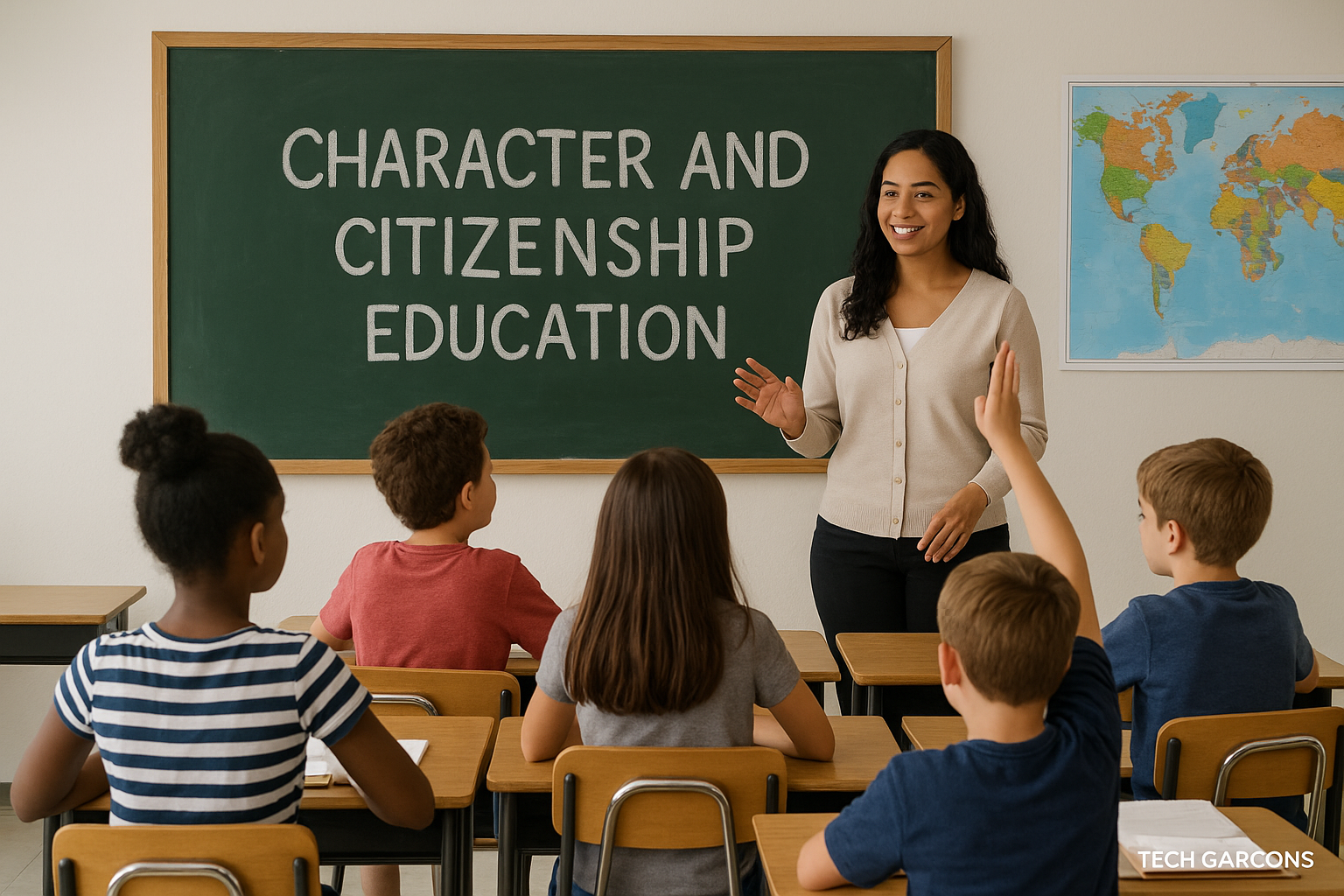
In today’s rapidly changing world, education extends beyond academic excellence. While mathematics, science, and language subjects build intellectual capacity, schools also carry a deeper mission: nurturing values, instilling responsibility, and cultivating civic engagement. This is where Character and Citizenship Education (CCE) plays a crucial role.
Character and Citizenship Education (CCE) is a framework adopted in many countries to nurture students into responsible, respectful, and active members of society. It develops moral values, resilience, empathy, and civic responsibility — qualities necessary for both personal success and societal harmony. Unlike purely academic learning, CCE emphasizes human values and life skills.
If you run an education-focused platform, like Tech Garcons Education, writing about topics such as character development and civic values is not just essential for SEO ranking but also for delivering impactful, AdSense-friendly content that resonates with readers and attracts long-term engagement.
What is Character and Citizenship Education?
Character and Citizenship Education combines moral education, social-emotional learning, and civic responsibility. It equips students with values like honesty, respect, empathy, resilience, and integrity, while also teaching the importance of being active and responsible citizens.
CCE is not about one-off lessons. Instead, it is integrated into the entire school experience, shaping daily behaviors, attitudes, and decision-making. Students learn not only what is right or wrong but also why ethical choices matter for individuals and the community.
Why is Character and Citizenship Education Important?
- Promotes Social Harmony
In diverse societies, CCE helps students respect cultural, religious, and ethnic differences. This prevents conflict and promotes inclusion. - Builds Ethical Decision-Making
By discussing real-world moral dilemmas, students learn to make choices that align with ethical standards and long-term consequences. - Strengthens National Identity
Citizenship education emphasizes values like loyalty, responsibility, and active participation in civic life, creating a stronger sense of belonging. - Supports Emotional Growth
CCE strengthens resilience and self-awareness. This makes young people more capable of handling stress, conflict, and personal setbacks. - Enhances Future Leadership
Today’s students are tomorrow’s leaders. Equipping them with character ensures they contribute positively to workplaces, communities, and governments.
Key Components of Character and Citizenship Education
CCE usually includes multiple areas of focus, often aligned with national education frameworks.
- Values Education
- Respect, integrity, responsibility, resilience, care, and harmony.
- Encourages self-reflection and role modeling.
- Civic Education
- Understanding rights, responsibilities, laws, and governance.
- Encourages active participation in community service.
- Social-Emotional Learning (SEL)
- Emotional intelligence, self-awareness, empathy, and managing relationships.
- National Education
- Building pride, understanding national challenges, and cultivating patriotism.
- Community Engagement
- Volunteering, charity, and involvement in social initiatives.
Methods of Teaching Character and Citizenship Education
CCE is not limited to textbooks. It is most effective when integrated into everyday experiences:
- Classroom Discussions: Encouraging debates on moral issues, civic rights, and responsibilities.
- Service Learning: Community projects where students apply lessons to real-world contexts.
- Role-Playing & Simulations: Practical activities like mock parliaments, conflict resolution, or ethical decision-making games.
- Teacher Role Models: Educators acting as role models, demonstrating values in practice.
- Collaborative Learning: Peer learning that emphasizes cooperation, teamwork, and empathy.
- Integration with Subjects: Infusing CCE themes into history, literature, or science discussions.
Global Perspective on Character and Citizenship Education
Different countries adopt unique approaches:
- United States: Character education often emphasizes values like honesty, respect, and responsibility, combined with civics education to foster democratic participation.
- Singapore: A structured CCE framework integrates values education, community service, and national identity building.
- United Kingdom: Citizenship is a statutory subject focusing on democracy, justice, and rights.
- Finland: Highlights a well-rounded education that integrates character growth with practical life skills and emotional intelligence.
Despite different models, the universal goal remains: to shape responsible citizens who contribute positively to society.
Benefits of Character and Citizenship Education
- Builds strong moral foundations.
- Reduces bullying and social conflicts.
- Improves school culture and relationships.
- Prepares students for global citizenship.
- Strengthens leadership and responsibility.
- Enhances lifelong resilience and adaptability.
Challenges in Implementing CCE
- Cultural Differences: Defining universal values can be complex in multicultural societies.
- Assessment: Unlike math or science, character cannot be measured easily through exams.
- Consistency: Teachers, parents, and institutions must align efforts.
- Student Engagement: Making CCE relevant and exciting requires creativity.
Future of Character and Citizenship Education
With growing global challenges — climate change, digital ethics, political polarization — CCE becomes more critical than ever. Schools must evolve to include discussions on digital citizenship, sustainability, and global cooperation.
Future classrooms will increasingly integrate:
- Technology for civic simulations.
- Cross-cultural collaboration projects.
- Environmental and sustainability education.
- Discussions about artificial intelligence ethics.
Teachers’ Contribution in Character and Citizenship Education (CCE)
Teachers are often regarded as the most influential figures in a student’s learning journey, not only because they deliver academic knowledge but also because they serve as role models in the classroom. Their words, actions, and attitudes significantly shape how students perceive values such as respect, honesty, empathy, and responsibility.
A teacher who consistently demonstrates fairness, patience, and integrity automatically sets the standard for students to follow. When students observe their teachers practicing good citizenship — such as respecting diverse opinions, engaging in community discussions, or promoting ethical decision-making — they are more likely to adopt these behaviors themselves.
In Character and Citizenship Education (CCE), teachers go beyond textbooks. They facilitate interactive discussions, storytelling, debates, and collaborative classroom projects that allow students to apply values in real-life scenarios. For example, resolving conflicts during group activities helps students learn negotiation and empathy, while community service projects instill responsibility and social awareness.
Teachers also build trust with students by creating a safe classroom environment where learners feel comfortable expressing their ideas. This trust is essential for shaping character, as students are more receptive to moral guidance when they believe their teachers genuinely care.
Ultimately, teachers are the living examples of the principles CCE aims to teach. With continuous training and professional development, educators can refine their strategies to nurture not only academically capable students but also responsible citizens who contribute positively to society.
FAQs on Character and Citizenship Education
| Question | Answer |
|---|---|
| What is Character and Citizenship Education? | It is a framework that develops moral values, emotional intelligence, and civic responsibility among students. |
| Why is CCE important? | It nurtures responsible, empathetic citizens who can contribute to social harmony and national development. |
| How is CCE taught in schools? | Through classroom discussions, community service, role-playing, and integration into other subjects. |
| What are the key values in CCE? | Respect, integrity, care, resilience, responsibility, and harmony. |
| Can CCE improve academic performance? | Yes, by fostering discipline, focus, and positive social interactions, it indirectly supports better learning outcomes. |
| Is CCE only for schools? | Moreover, families, communities, and workplaces hold an essential role in shaping character and citizenship education. |
Conclusion
Character and Citizenship Education goes beyond academics — it forms the core of holistic learning. By instilling values, empathy, and civic responsibility, CCE ensures that future generations not only excel in careers but also contribute to a more compassionate, inclusive, and sustainable society.
For anyone in the education field — whether schools, parents, or platforms like Tech Garcons Education — prioritizing character and citizenship education is a powerful investment in the future.




Автономний веб-ресурс, присвячена актуальному мистецтву, художній творчості, звукам, стилю та альтернативній журналістиці. Платформа зосереджується на явищах, які перебувають поза популярною культурою: розлогі розмови з учасниками андерграундних сцен, огляди на авангардні платівки, огляди візуального мистецтва та тексти про трансформацію самосприйняття. Особлива фокус відводиться українському культурному контексту, андеграундним виконавцям, урбаністичному вбранню та напрямкам, що визначають актуальне бачення нашого часу. Пізнавати цей світ ви можете на necatli.space, де публікації поєднують детальну аналітику з художніми образами, даючи аудиторії не голі факти, а альтернативну оптику осмислення дійсності.