

Introduction
Real estate is one of the most dynamic industries in the world, and property ownership often comes with a wide range of legal and zoning requirements.
One of the most important concepts property owners and investors must understand is variance in real estate.
A variance can be the key to using your property in a way that would otherwise be restricted by local zoning laws.
In this comprehensive guide, we will explore what real estate variance means, the types of variances, the application process, benefits and drawbacks, real-life examples,
and how property owners can successfully navigate zoning regulations.
What is a Variance in Real Estate?
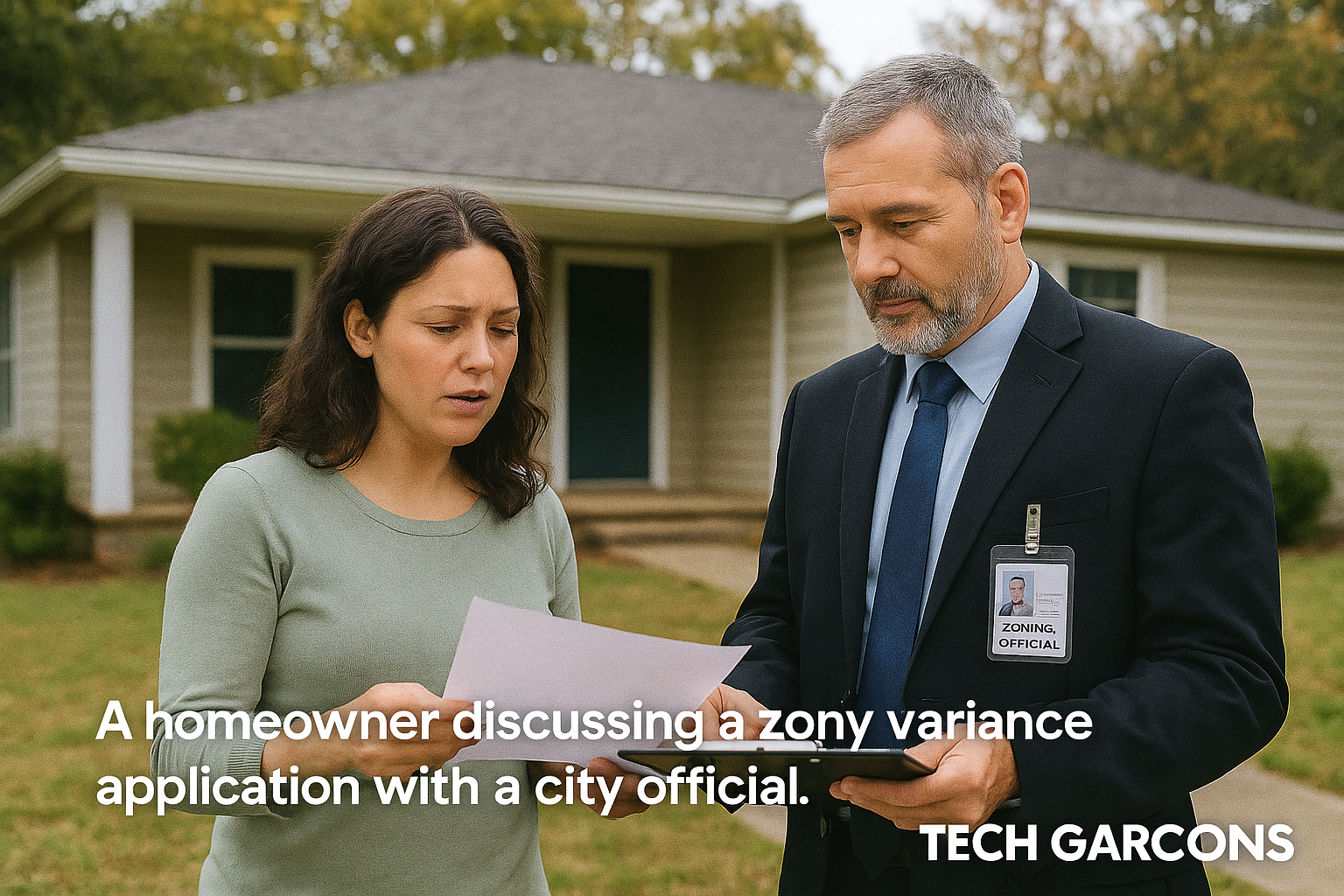
A variance in real estate is a special exception granted by a zoning board that allows a property owner to use land in a way that deviates from the local zoning ordinances.
For example, if zoning laws require houses to be at least 20 feet away from the property line, but a homeowner wants to build a garage 15 feet from the boundary, they must request a variance.
Why are Variances Important?
Zoning laws exist to maintain community planning, safety, and property values. However, strict adherence to zoning codes may not always be practical or fair. Variances provide flexibility while ensuring development remains consistent with community standards.
Without variances, property owners would face unnecessary hardships that could lower property value or prevent legitimate land use.
Types of Variances in Real Estate
There are generally two main types of variances:
| Type of Variance | Definition | Example |
|---|---|---|
| Area Variance | Permits deviation from physical or dimensional zoning requirements. | Building a deck closer to the property line than allowed. |
| Use Variance | Allows land to be used in a way not permitted by zoning. | Opening a small business in a residential zone. |
The Real Estate Variance Process
Applying for a variance requires several steps:
| Step | Action | Details |
|---|---|---|
| 1 | Application Submission | The property owner files a variance request with the zoning board. |
| 2 | Review | City staff review the request for compliance with laws. |
| 3 | Public Hearing | Neighbors and community members can voice support or opposition. |
| 4 | Board Decision | The zoning board votes to approve or deny the variance. |
| 5 | Implementation | If approved, the property owner can move forward with construction or land use. |
Key Requirements for Approval
Zoning boards don’t grant variances easily. To succeed, property owners must usually prove:
- Unnecessary hardship – the property cannot be used reasonably without the variance.
- Unique conditions – the hardship is due to property-specific factors (not general).
- No harm to public interest – the variance won’t negatively impact neighbors or the community.
Real-Life Examples of Variances
- Area Variance Example: A homeowner wants to install a wheelchair ramp that extends into the setback area. The variance allows accessibility while maintaining community safety.
- Use Variance Example: A historic residential property is converted into a bed-and-breakfast. The zoning board grants a variance because it enhances tourism without disrupting the neighborhood.
Advantages of Variances
| Advantages | Description |
|---|---|
| Flexibility | Allows creative property use without breaking the law. |
| Property Value | Can increase property value by expanding potential uses. |
| Community Growth | Encourages development while still protecting community standards. |
Disadvantages of Variances
| Disadvantages | Description |
|---|---|
| Uncertainty | Variance approval is not guaranteed. |
| Legal Complexity | Requires paperwork, hearings, and sometimes lawyers. |
| Community Opposition | Neighbors may oppose the request, leading to denial. |
Variances vs. Rezoning
It’s important not to confuse variances with rezoning.
| Variance | Rezoning |
|---|---|
| Small exception to zoning rules | Permanent change to zoning classification |
| Property-specific | Community-wide impact |
| Shorter approval process | Longer, legislative process |
Tips for Getting a Variance Approved
- Hire an experienced real estate attorney or planner.
- Collect supporting evidence like surveys, photos, and blueprints.
- Show that your request won’t harm the community’s safety or aesthetics.
- Be prepared for a public hearing and address community concerns.
Common Mistakes When Applying for Variances
- Failing to understand zoning codes.
- Submitting incomplete applications.
- Not preparing evidence of hardship.
- Ignoring neighbor concerns.
Future of Variances in Real Estate
With rapid urbanization and changing housing needs, variances are becoming more common. Local governments are balancing sustainability, housing shortages, and economic development. In the future, we may see:
- More flexibility in mixed-use development.
- Stricter requirements for environmental impact.
- Digital variance applications for faster processing.
Conclusion
A variance in real estate is more than just an exception to
zoning rules—it’s a tool that balances individual property rights with community planning.
Understanding the types, process, advantages, and risks of variances can help homeowners
, investors, and developers maximize property value while staying compliant with local laws.
Whether you are building an addition, opening a business, or repurposing land, knowing
how to request a variance could make the difference between approval and denial.
FAQs
1. What is a variance in real estate?
A variance is special permission to use land differently than allowed by zoning laws.
2. What are the two types of variances?
The two main types are area variances (dimensional changes) and use variances (land use changes).
3. Who approves a variance?
Local zoning boards or planning commissions review and approve variance applications.
4. How long does the process take?
Typically, it can take 30–90 days, depending on the complexity and public hearings.
5. Can a variance be denied?
Yes. Variances are denied if they harm public interest, lack hardship, or face strong community opposition.